
Research's
The Importance of Surgical Instruments in Safe and Efficient Patient Care
02
Sep
Sep
The Importance of Surgical Instruments in Safe and Efficient Patient Care
07 August 2026
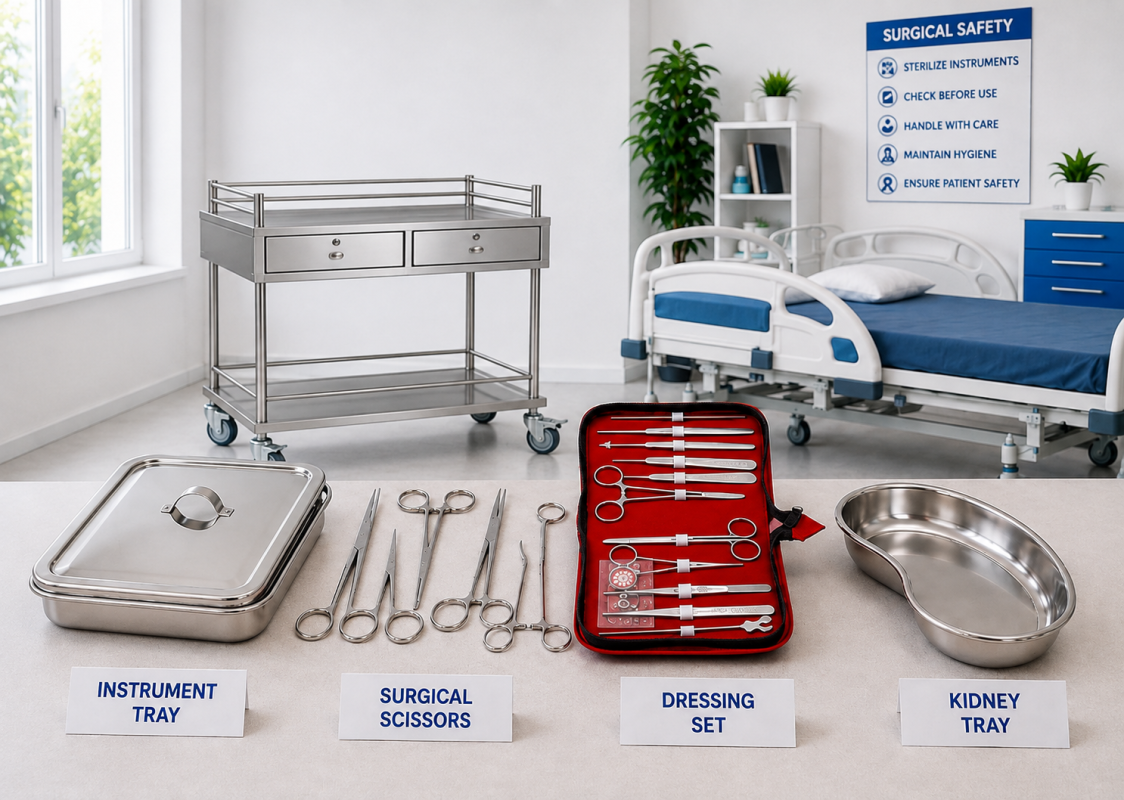
Surgical instruments are fundamental tools used by healthcare professionals to perform medical examinations, surgical procedures, wound care, and patient treatment with precision and safety. From hospitals and operating theatres to clinics and emergency care units, high-quality surgical instruments ensure healthcare providers can deliver efficient medical care while maintaining the highest standards of hygiene and patient safety. Essential products such as instrument trays, surgical scissors, dressing sets, and kidney trays are indispensable in daily medical practice.
As healthcare services continue to advance, the demand for durable, reliable, and sterilizable surgical instruments has grown significantly. Medical professionals depend on precision-engineered instruments that provide accuracy, durability, and ease of handling during both minor and major procedures. High-quality surgical instruments help improve clinical efficiency while reducing the risk of complications and supporting better patient outcomes.
Modern surgical instruments are manufactured using premium medical-grade stainless steel to provide corrosion resistance, long service life, and repeated sterilization without compromising performance. Designed to meet international healthcare standards, these instruments support hospitals, surgical centers, outpatient clinics, and emergency departments in delivering safe and effective patient care.
The following factors highlight the importance of surgical instruments in modern healthcare:
- Precision During Procedures: High-quality instruments enable healthcare professionals to perform procedures accurately and efficiently.
- Patient Safety: Reliable surgical instruments reduce procedural risks and support safe patient treatment.
- Infection Prevention: Stainless steel instruments are easy to clean and sterilize, helping maintain a hygienic clinical environment.
- Durable Construction: Medical-grade materials provide excellent strength, corrosion resistance, and long-term reliability.
- Improved Clinical Efficiency: Well-designed instruments simplify surgical procedures and improve workflow.
- Versatile Applications: Suitable for hospitals, clinics, operating theatres, emergency departments, and dressing rooms.
- Easy Sterilization: Instruments are designed to withstand repeated autoclave sterilization without damage.
- Comfortable Handling: Ergonomic designs improve control and reduce hand fatigue during prolonged procedures.
- Compliance with Medical Standards: Manufactured according to recognized healthcare quality and safety requirements.
- Better Patient Outcomes: Precision instruments contribute to successful procedures, faster recovery, and improved healthcare quality.
The following surgical instruments are commonly used in hospitals and healthcare facilities:
- Instrument Tray: Used to organize, transport, and sterilize surgical instruments before and during medical procedures.
- Surgical Scissors: Designed for cutting tissues, sutures, dressings, and other medical materials with precision.
- Dressing Set: A complete collection of essential instruments used for wound dressing, cleaning, and minor surgical procedures.
- Kidney Tray: Commonly used to hold surgical instruments, dressings, medical waste, and fluids during clinical procedures.
Selecting high-quality surgical instruments is essential for ensuring precision, safety, and efficiency during patient care. Healthcare providers should choose instruments manufactured from medical-grade stainless steel that comply with international quality standards while ensuring regular inspection and proper sterilization for long-term performance.
As medical technology continues to evolve, surgical instruments remain a cornerstone of modern healthcare. Reliable products such as instrument trays, surgical scissors, dressing sets, and kidney trays help healthcare professionals perform procedures with confidence, maintain sterile environments, and deliver safe, effective, and high-quality patient care across hospitals, clinics, and surgical centers.
